

Introduction

Have you ever gone to bed exhausted only to spend hours tossing and turning? Or maybe you fall asleep quickly but wake up several times during the night, leaving you feeling drained the next morning.
You’re not alone. Millions of adults struggle with poor sleep, and the problem has become increasingly common due to stress, busy schedules, excessive screen time, and unhealthy daily habits. While sleeping pills may provide temporary relief, they don’t address the underlying causes of poor sleep and are not a long-term solution for most people.
The good news is that your body is naturally designed to sleep well. By making a few science-backed lifestyle changes, you can improve both the quality and duration of your sleep without relying on medication.
Poor sleep doesn’t just make you feel tired the next day. Over time, it can affect your mood, weaken your immune system, reduce your ability to concentrate, and even increase the risk of chronic health conditions. The good news is that improving your sleep often starts with small, consistent habits rather than drastic changes.
In this guide, you’ll discover ten proven strategies to help you fall asleep faster, sleep more deeply, and wake up feeling refreshed and energized.
Key Takeaways
✔ Maintain a consistent sleep schedule—even on weekends.
✔ Reduce exposure to blue light before bedtime.
✔ Create a relaxing evening routine to prepare your mind and body for sleep.
✔ Keep your bedroom cool, dark, and quiet.
✔ Avoid caffeine, alcohol, and heavy meals close to bedtime.
✔ Stay physically active during the day.
✔ Learn healthy ways to manage daily stress.
✔ Seek professional advice if sleep problems persist for several weeks.
Why Good Sleep Matters
Sleep is much more than simply resting. During sleep, your body performs essential maintenance that supports nearly every aspect of your health.
Quality sleep helps:
- strengthen the immune system;
- improve memory and concentration;
- regulate hormones that control hunger and metabolism;
- support heart health;
- reduce inflammation;
- improve mood and emotional well-being;
- lower the risk of chronic diseases.
On the other hand, chronic sleep deprivation has been associated with an increased risk of obesity, type 2 diabetes, high blood pressure, depression, and cardiovascular disease.
Think of sleep as your body’s natural recovery system. Every good night of sleep prepares you to perform better physically and mentally the next day.
A good night’s sleep also makes it easier to maintain healthy morning habits that support your energy, focus, and overall well-being.
Simply put, quality sleep is one of the most powerful investments you can make in your overall health. It supports both your body and mind every single day.
Understand Your Natural Sleep Cycle
Many people believe that sleeping longer automatically means sleeping better. In reality, sleep quality matters just as much as sleep quantity.
Throughout the night, your brain cycles through several sleep stages, including:
| Sleep Stage | Main Function |
|---|---|
| Light Sleep | Body begins to relax |
| Deep Sleep | Physical recovery and tissue repair |
| REM Sleep | Memory, learning, emotional processing |
Learn more about how sleep cycles affect your health on the National Institutes of Health website.
Interrupting these cycles repeatedly—because of noise, stress, or checking your phone—can leave you feeling tired even after spending eight hours in bed.
Instead of focusing only on how many hours you sleep, aim to protect these natural sleep cycles by creating healthy bedtime habits.
| Age | Recommended Sleep |
|---|---|
| Adults | 7–9 hours |
| Older Adults | 7–8 hours |
Create a Consistent Sleep Schedule
Your body operates on an internal clock known as the circadian rhythm. This biological clock regulates when you feel sleepy and when you naturally wake up.
One of the best ways to improve sleep naturally is to go to bed and wake up at roughly the same time every day—including weekends.
A regular schedule helps your brain anticipate sleep, making it easier to fall asleep and wake up without feeling groggy.
Simple habits to build consistency:
- Choose a realistic bedtime.
- Wake up at the same time every morning.
- Avoid sleeping in for hours on weekends.
- If you nap, keep it under 30 minutes and avoid late-afternoon naps.
Even small improvements in consistency can significantly improve sleep quality over time.
The American Academy of Sleep Medicine also recommends maintaining consistent sleep habits as part of healthy sleep hygiene.
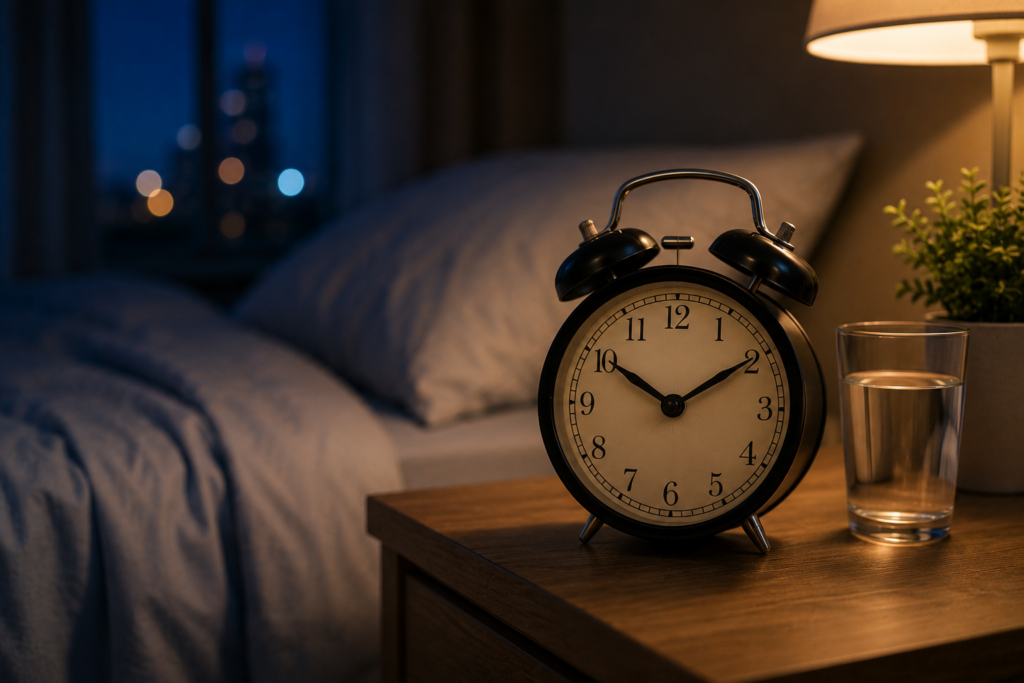
Limit Screen Time Before Bed
In today’s digital world, many people end their day scrolling through social media, watching TV, or answering emails. While these activities may seem relaxing, they can actually make it harder to fall asleep.
Electronic devices such as smartphones, tablets, computers, and televisions emit blue light, which can interfere with your body’s production of melatonin—the hormone that signals it’s time to sleep.
Blue light isn’t the only problem. Mentally stimulating content, such as social media or work emails, can also keep your brain alert when it should be winding down.
When melatonin production is delayed, your brain stays alert longer, making it more difficult to fall asleep naturally.
Better evening habits include:
- Turn off electronic devices at least 30 to 60 minutes before bedtime.
- If you must use a screen, enable Night Shift or a blue light filter.
- Replace screen time with reading, gentle stretching, meditation, or listening to calming music.
These simple changes help your brain recognize that bedtime is approaching.
Build a Relaxing Evening Routine
Just as children benefit from bedtime routines, adults do too.
Creating a predictable evening routine trains your brain to associate certain activities with sleep. Over time, these habits become powerful signals that help you unwind naturally.
A relaxing bedtime routine might include:
- Taking a warm shower or bath.
- Drinking a cup of caffeine-free herbal tea.
- Reading a book.
- Practicing deep breathing.
- Writing down tomorrow’s tasks to clear your mind.
- Listening to calming music or nature sounds.
The goal isn’t to follow a perfect routine but to repeat calming activities consistently.
Even 20 to 30 minutes of relaxation before bed can make a noticeable difference.
Remember, consistency is more important than perfection. Even following a relaxing routine for just a few nights each week is better than having no routine at all.

Optimize Your Bedroom Environment
Your bedroom should support sleep—not compete with it.
Many sleep experts recommend thinking of your bedroom as a recovery space designed specifically for rest.
Small environmental changes can significantly improve sleep quality.
Consider these adjustments:
| Habit | Why It Helps |
|---|---|
| Keep the room cool | A slightly cooler room helps your body prepare for sleep. |
| Reduce noise | Earplugs or white noise may improve sleep in noisy environments. |
| Block light | Blackout curtains or an eye mask can support natural melatonin production. |
| Choose a comfortable mattress and pillow | Proper support helps reduce discomfort and nighttime awakenings. |
| Remove unnecessary electronics | Fewer distractions make it easier to relax. |
A clean, quiet, and comfortable bedroom tells your brain it’s time to rest.
Watch What You Eat and Drink
Your eating habits can have a significant impact on your sleep.
Large meals, spicy foods, excessive alcohol, and caffeine consumed late in the day may interfere with your ability to fall asleep or stay asleep.
Certain foods naturally contain nutrients like magnesium and tryptophan, which play a role in supporting healthy sleep.
Try these healthy habits:
✔ Avoid caffeine for at least 6–8 hours before bedtime, especially if you’re sensitive to it.
✔ Limit alcohol in the evening. Although it may make you feel sleepy initially, it often disrupts deep sleep later in the night.
✔ Avoid heavy meals within two to three hours of bedtime.
✔ If you’re hungry before bed, choose a light snack such as:
- Greek yogurt
- A banana
- A handful of almonds
- Oatmeal
- Whole-grain toast with peanut butter
Staying well hydrated during the day is also important, but try not to drink large amounts of water right before going to bed to reduce nighttime bathroom trips.
Learning how much water your body actually needs each day can also support your overall health and nighttime comfort.
Related article: How Much Water Should You Drink Every Day? The Science Explained
Exercise Regularly—But Time It Right
Regular physical activity is one of the most effective natural ways to improve sleep.
Exercise helps reduce stress, regulate your internal body clock, and increase the amount of deep sleep you get each night.
Walking, cycling, swimming, strength training, and yoga can all contribute to better sleep when practiced consistently.
Even a simple daily walk can help regulate your body’s internal clock and improve sleep quality over time.
However, timing matters.
For some people, intense exercise too close to bedtime can temporarily increase alertness and make it harder to fall asleep.
For better sleep:
- Aim for at least 150 minutes of moderate physical activity each week.
- Exercise earlier in the day whenever possible.
- If you prefer evening workouts, choose lower-intensity activities such as walking, stretching, or yoga.
Related article: The Benefits of Walking 30 Minutes Every Day

Manage Stress and Calm Your Mind
Stress is one of the most common reasons people struggle to fall asleep. When your brain is busy replaying conversations, worrying about tomorrow’s tasks, or thinking about unfinished work, it’s difficult for your body to fully relax.
This happens because stress activates the body’s “fight-or-flight” response, increasing the production of hormones like cortisol and adrenaline. While these hormones are helpful in dangerous situations, elevated levels at bedtime can make it much harder to fall asleep.
Fortunately, even a few minutes of relaxation can help calm your nervous system.
Science-backed ways to reduce stress before bed include:
- Practice deep breathing for five to ten minutes.
- Try mindfulness meditation or guided relaxation.
- Write your thoughts in a journal to clear your mind.
- Make a simple to-do list for the next day to reduce mental overload.
- Listen to calming music or nature sounds.
The goal isn’t to eliminate stress completely—it’s to help your body shift into a calmer state that’s more suitable for sleep.
If stress is affecting more than just your sleep, you may also enjoy our guide on natural ways to reduce daily stress.
Related article: How to Reduce Stress Naturally: 10 Science-Backed Ways to Feel Calmer Every Day
Know When to Seek Professional Help
Occasional sleepless nights are completely normal. However, if sleep problems continue for several weeks or begin affecting your daily life, it may be time to talk to a healthcare professional.
Poor sleep can sometimes be linked to underlying conditions such as:
- Sleep apnea
- Restless legs syndrome
- Anxiety disorders
- Depression
- Chronic pain
- Thyroid disorders
A healthcare provider can help identify the underlying cause and recommend the most appropriate treatment.
Seek medical advice if you:
- Have difficulty sleeping for more than three months.
- Frequently wake up gasping for air.
- Feel extremely tired despite sleeping enough hours.
- Regularly fall asleep during the day.
- Snore loudly combined with daytime fatigue.
Early diagnosis can significantly improve both your sleep and your overall health.
For additional information about sleep disorders and healthy sleep, visit the National Heart, Lung, and Blood Institute.
Common Sleep Myths
Many sleep tips shared online aren’t supported by science. Let’s separate fact from fiction.
| Myth | Fact |
|---|---|
| Everyone needs exactly 8 hours of sleep. | Sleep needs vary from person to person. Most adults benefit from 7–9 hours. |
| Alcohol helps you sleep better. | Alcohol may help you fall asleep initially but often reduces sleep quality later in the night. |
| Watching TV helps you relax before bed. | Screen exposure may delay melatonin production and make it harder to fall asleep. |
| You can catch up on lost sleep every weekend. | Sleeping in occasionally helps, but maintaining a regular schedule is much more beneficial. |
| Snoring is always harmless. | Loud, frequent snoring may be a sign of sleep apnea and should be evaluated by a healthcare professional. |
Understanding these myths can help you make healthier choices based on evidence rather than misconceptions.
A Simple 7-Day Sleep Improvement Plan
Improving your sleep doesn’t require changing everything overnight. Small, consistent habits often lead to the best long-term results.
| Day | Goal |
|---|---|
| Monday | Set a consistent bedtime and wake-up time. |
| Tuesday | Stop using screens one hour before bed. |
| Wednesday | Make your bedroom cooler, darker, and quieter. |
| Thursday | Avoid caffeine after mid-afternoon. |
| Friday | Add a relaxing bedtime routine such as reading or stretching. |
| Saturday | Spend time outdoors and stay physically active during the day. |
| Sunday | Review your progress and keep the habits that worked best. |
Remember, consistency matters far more than perfection.
Frequently Asked Questions
How long does it take to improve sleep naturally?
Some people notice improvements within a few days, while others may need several weeks of consistent healthy habits. Patience and consistency are key.
Is it okay to take naps during the day?
Yes, but keep naps short—around 20 to 30 minutes—and avoid napping late in the afternoon, as it may make it harder to fall asleep at night.
What is the ideal bedroom temperature for sleep?
Experts generally recommend keeping your bedroom cool, around 60–67°F (15–19°C), although personal comfort varies.
Can exercise help with insomnia?
Regular physical activity is associated with better sleep quality. However, very intense exercise immediately before bedtime may not be suitable for everyone.
Should I use melatonin supplements?
Melatonin supplements may be helpful in specific situations, such as jet lag or shift work, but they are not the best solution for every sleep problem. It’s always a good idea to consult a healthcare professional before using supplements regularly.
Can dehydration affect sleep?
Yes. Mild dehydration may contribute to discomfort, dry mouth, or muscle cramps that can interfere with sleep. Staying hydrated throughout the day—but avoiding excessive fluids right before bedtime—may support better sleep quality.

Conclusion
Good sleep isn’t a luxury—it’s one of the most important foundations of long-term health.
The encouraging news is that improving your sleep doesn’t usually require dramatic changes. Small, consistent habits—such as following a regular sleep schedule, limiting screen time before bed, creating a relaxing evening routine, staying active, and managing stress—can make a meaningful difference over time.
Rather than trying to change everything at once, choose one or two strategies from this guide and begin practicing them tonight. As these habits become part of your daily routine, you’ll likely notice improvements not only in your sleep but also in your energy levels, mood, concentration, and overall well-being.
Better sleep starts with small changes—and those small changes can lead to healthier, more energized days.
Better sleep doesn’t happen overnight, but every healthy habit you build today can make tomorrow morning a little brighter. Start with one small change tonight, stay consistent, and let those small improvements add up over time.